
what are you hungry for?
cannibalistic horror and love go hand in hand

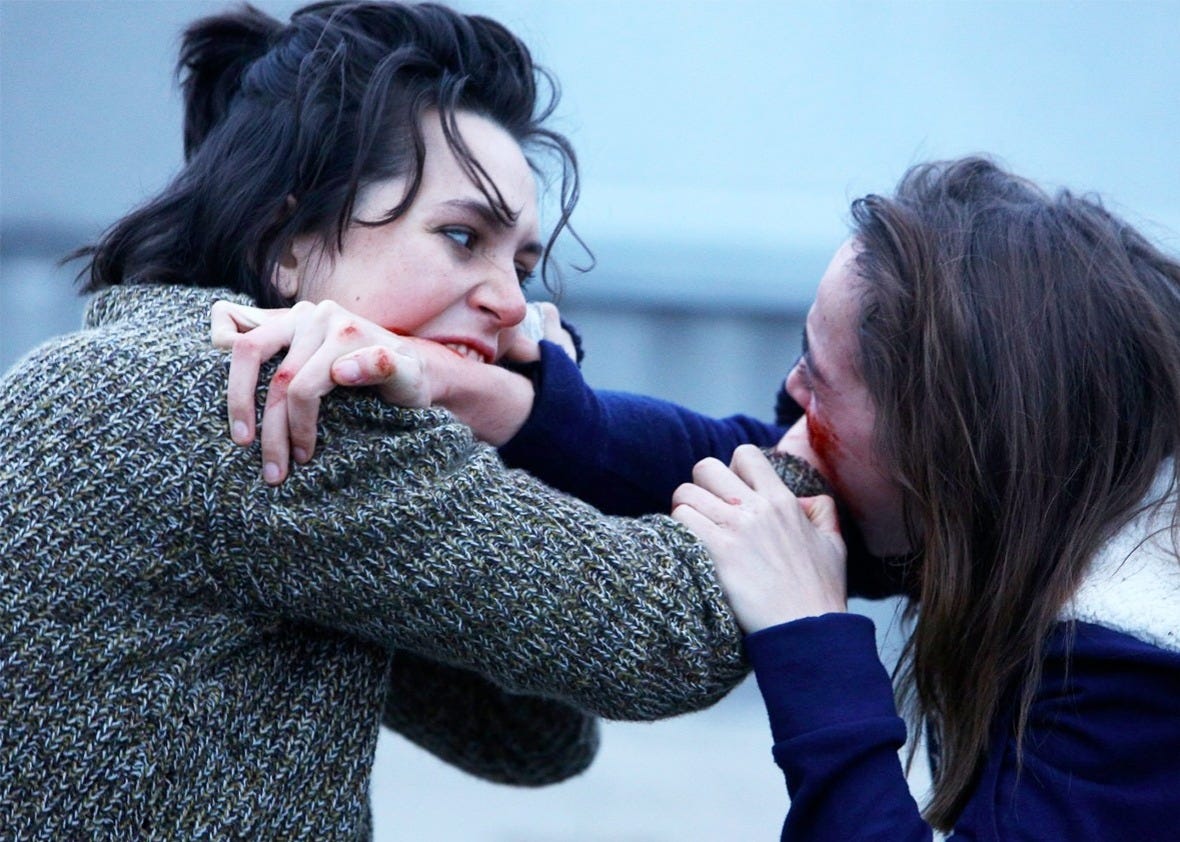
I had a dream where my father killed a little girl who looked just like me, and then he took me to the movies. I don’t remember how, in the dream, I discovered his crime, but I did in the lobby of the movie theater, and I screamed like a wounded animal, shouting and wailing. THIS IS NOT MY FATHER, I tried to say to the woman behind the register. YOU ARE NOT MY FATHER ANYMORE, I yelled at my father.
And then I was bleeding from the little girl’s wound, in my own body now. And I am wailing on the floor on the movie theater lobby, screaming, and I would not let my father touch me. Often in my dreams, I am bleeding. My wounds cannot be escaped.
And then I woke up. And I was so disgusted, horrified that I could not go back to sleep after, and I had to wait until the morning rolled around and it was time to start school. In this dream, my “father” both told me he loved me and despised me in one shot. By killing the girl who shared my face, he decided he did not want me anymore. But by taking me to the movies, our church, our holy place, he told me he knew me, and therefore, loved me. Even in his crime, the father, my “father”, used this horror to show me he cared for me. He wanted to watch a movie with me, the thing I love most. And it terrified me.
Horror cannot exist without love. In every horror movie, it finds its roots in the love that exists between the people, or things, that are being tormented (or doing the tormenting). In The Haunting of Bly Manor, Dani loves Jamie, and she loves the children and Hannah and Owen. And it is because she loves them that she does what she does, why she becomes the Lady in the Lake. Peter and Rebecca love each other. This love is what brings upon some of the horrors in the show. It is, among other things, what haunts the children. The Lady in the Lake exists because of the love in her life. And, of course, there is the line: “You said it was a ghost story; it wasn't. It was a love story.” “Same thing, really.”
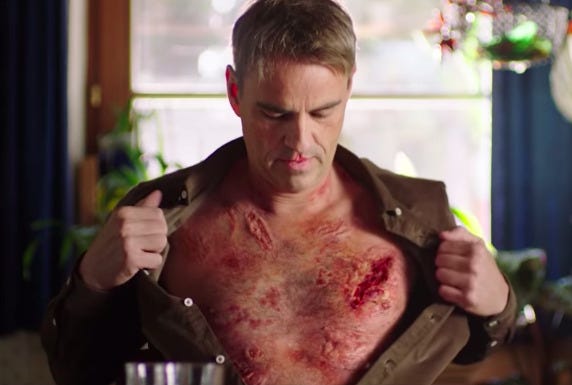
The father in Raw unbuttons his shirt and we see the truth. He allowed the love for his wife destroy him, and now their family will be plauged with raw hunger. He is scarred, his skin torn open, bites from his wife. Justine and Alexia suffer from what their mother does. Even destroyed, he still loves her. The cannibalism in the family keeps them together. Alexia takes her sister under her wing, and teaches Justine what she knows. While not romance, it is still love.
What do we want, more than anything? To be loved. What do we feel? Hunger. So it only makes sense that comsumption might be the same as love. There is almost something romantic about the idea of not being able to be without someone, and consumption is the only way to go on. The only way to be closer than a kiss.
More often than I should, I am reminded of The Terror. Only to some it is a love story, and to all it is a survival story of the worst kind. Men destroyed by their own hubris, driven to devouring each other when there is no chance of getting home. They have done what they have done for nothing.
And in the end, as his final act of sacrifice, so far from the man he used to be, James Fitzjames tells Francis Crozier to use his body to feed the men. Two men who despise each other, and in the end, are happy to call the other a brother, and James asks Francis, and not anyone else, to kill him. This request establishes, more than anything else they have done, how much they have grown to love each other, even in the very worst of circumstances. James says he is not Christ, so he sacrifices his body to feed men so far beyond saving it will not matter now.
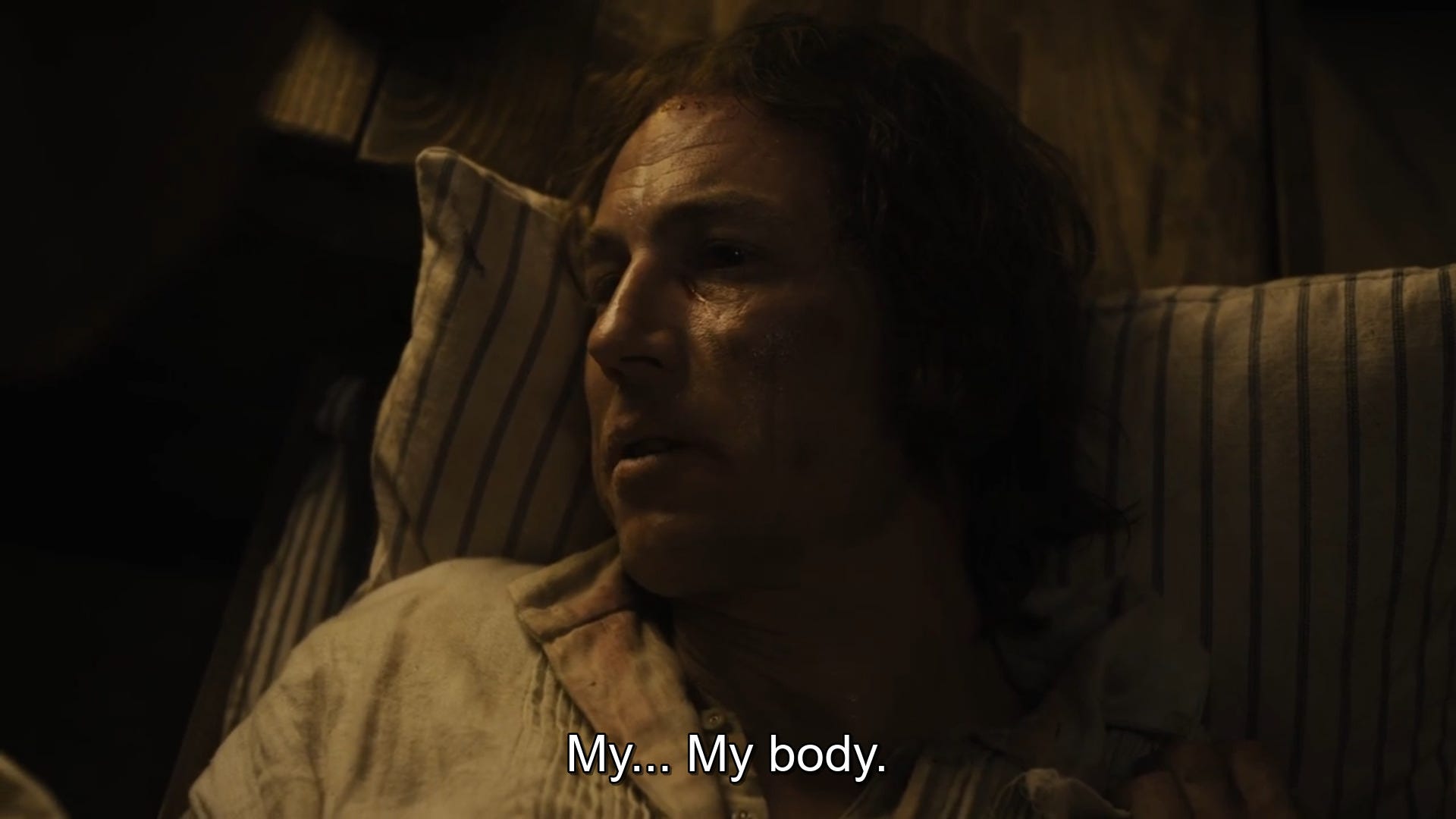
What else does Francis have to live for now? Nothing, I suppose. But he does. And really, what is at the center of horror? A clinging to life. Is there not love and beauty in wanting to live?
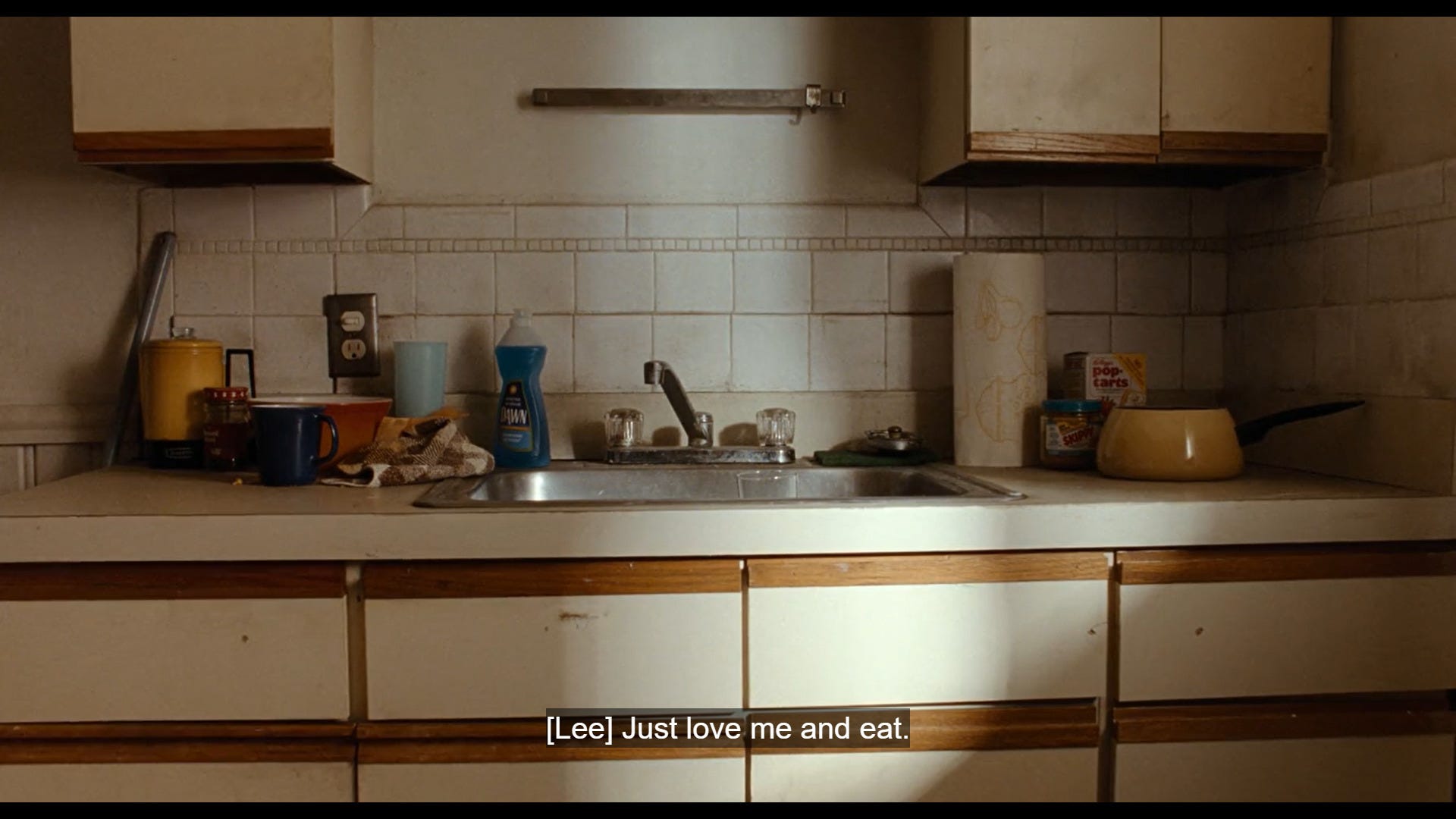
And how might someone cling to life? This is horror, so of course, they will consume. The most romantic momemt of Bones and All comes at the end, when Lee, moments from death, asks Maren to eat him. In death, a lover departs, but not without first making sure that the other will be sustained, even if through their body.
Food and love exist in the same space to me. Someone reminding me to eat is a little remind that I am loved, because someone does not want me to go hungry. This moment in Bones and All, and The Terror, is the same to me. Do not starve. And as I am about to die, I will do what I can to make sure you eat. And so, eat my body. Love and eat.
And we, too, as the audience must love. Why would I care about the torture a character experiences if I do not first care for them? Without that connection, they aren’t a character, just blood waiting to be split. Useless flesh. There is splatter, shock value horror, which doesn’t always need love to spook you. But the horror that sticks to my bones is the horror that exists with love, that sparked a love inside me for people I knew were going to meet a miserable end.
Most of all, I think it is about opposites. The very opposite of the horror, I think, is love. To me, what makes horror scary is the establishment that love exists, but it doesn’t matter— love is not going to save you.
In the dream I have dreamt, my “father” tells me he loves me. But it doesn’t matter at all; he destroys the girl with my face anyway. But he loved me. He knew me. He took me to all the places I love. Horror is the purest expression of love.
very beautiful!!!